

In the intricate world of business, a business corporation stands as an essential entity used by lots of entrepreneurs and capitalists to perform industrial activities. Basically, a service firm is a kind of business lawfully recognized as a different entity from its owners, using restricted liability to its shareholders. This indicates that the personal possessions of the investors are protected from business financial debts and responsibilities. Companies can enduring past the life expectancies of their owners, having the capability to be sold, inherited, or shared. They can raise capital a lot more easily than other service types by offering shares, which can be interesting prospective financiers. Structurally, corporations are needed to comply with more strenuous regulations and tax obligation needs contrasted to sole proprietorships or collaborations, including keeping thorough documents, holding routine conferences, and filing yearly records.
Establishing a company includes a number of actions, starting with picking a suitable name that adheres to state standards. This is adhered to by the declaring of 'Articles of Incorporation' with the appropriate state authority, which lays out the key function of the business, its primary business, and the number and kind of authorized shares. The company additionally needs to develop a collection of bylaws that dictate exactly how the company will certainly be run, consisting of the process for managing internal conflicts, the functions of directors and policemans, and the frequency of board meetings. One considerable benefit of a firm is the ability to bring in staff members with incentives like supply alternatives. Furthermore, firms might have a simpler time obtaining small business loan and attracting high-quality suppliers and organization companions due to their perceived stability and formal structure. They additionally deal with downsides such as double taxation, where the corporation's profits are taxed and rewards paid to investors are strained again on specific returns.
Understanding the Structure and Function of Company Companies
A business company is a lawfully marked entity that is recognized by its jurisdiction for the objective of carrying out industrial activities. At its core, a company is structured to be a different legal entity from its proprietors, who are called shareholders. This separation is important as it provides the shareholders with minimal responsibility, meaning their personal possessions are protected from the company's financial debts and legal disagreements. Corporations are generally taken care of by a board of supervisors, chosen by the shareholders, that make major plan and financial decisions and oversee the basic monitoring of the entity. The daily procedures, nonetheless, are handled by staff members and policemans that are designated by the board. The framework of a corporation is created to enable it to manage everything from small-scale businesses to substantial, multinational empires that require a complicated hierarchy of management and operational systems. In enhancement to restricted liability, corporations take advantage of perpetual existence, implying they can remain to run independently of the initial proprietors' participations, which can alter as a result of sales of stock, fatalities, or other factors. This function is especially useful for obtaining lasting investment as it offers stability and the possibility for growth and expansion. Firms can bring in investments by releasing shares of supply, which represent partial possession in the business. This capacity to increase capital makes them a powerful lorry for growth and technology. However, companies go through rigid guidelines and are called for to follow established corporate governance methods, consisting of regular investor meetings, thorough record-keeping, and public monetary coverage, depending on the size of the corporation and whether it is openly traded. In general, business firm is a crucial player in the international economy, fueling advancement, and assisting in financial activity throughout diverse markets.
Structural Characteristics and Monitoring Strategies of Business Corporations
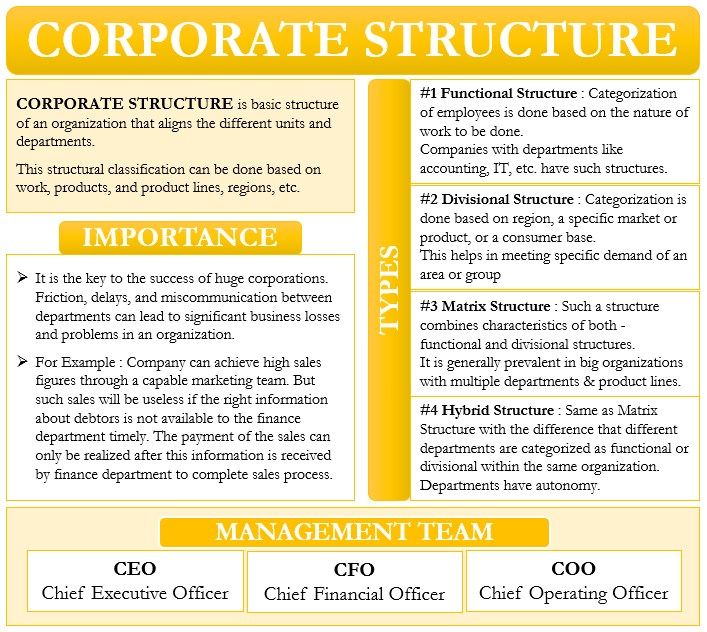
Company companies run through a complex internet of architectural dynamics and administration approaches that are necessary for attaining lasting success and competition. At the core of a corporate structure is the board of directors, in charge of making crucial choices that form the future of the organization. how to find information about a company in canada comprises individuals from varied backgrounds, bringing a riches of experience and varying point of views to the table. Their strategic choices influence every little thing from plan setup and economic management to ethical standards and business governance. Below the board, the business framework of a firm can vary commonly, commonly depending upon the market, the dimension of the business, and its functional requirements. Typical departments consist of operations, advertising, human resources, and financing, each led by senior execs who collaborate certain locations of business. Administration approaches in these firms are similarly diverse and should straighten with the firm's overall objectives and culture. Strategic planning includes setting lasting goals and establishing the finest techniques to achieve them, which frequently includes a solid emphasis on technology, market expansion, and performance renovations. Risk administration is another vital method, including the recognition, analysis, and reduction of dangers that might negatively influence the business's assets and making capacity. Additionally, human resource administration plays a crucial role in keeping the wellness of the corporation by concentrating on training, retention, and recruitment strategies that make certain the business brings in and keeps the most effective abilities. In addition, in today's international market, firms should likewise take on flexible techniques to reply to rapid changes in market conditions and consumer habits. This might involve the adoption of new technologies or the pivot to a lot more sustainable operational techniques, dealing with growing consumer and governing needs for accountable business actions. Overall, the capacity to integrate solid architectural foundations with flexible monitoring approaches specifies the potential of an organization firm to thrive in a competitive atmosphere, marking the distinction between those that lead the market and those that comply with.
Understanding the Lawful Framework and Administration of Company Companies
Business firms, as lawfully defined entities, run under an intricate structure of guidelines and policies that determine their administration and functional strategies. This lawful framework is mainly developed to organize the numerous rate of interests within a company, ranging from shareholders and directors to administration and workers. At its core, the administration of a company corporation rests on the board of supervisors, that are chosen by the investors to supervise the critical instructions of the firm and make sure that it complies with lawful and ethical standards. The board holds substantial power, including the visit of leading execs, solution of broad company plans, and oversight of total corporate performance. Investors, while not involved in daily procedures, preserve influence with voting civil liberties on major concerns at yearly basic conferences, which can include decisions on mergers, purchases, and the election of supervisors. Monitoring, led by the CEO, is in charge of carrying out the approaches set by the board and managing the company's everyday operations. This splitting up of power is essential in keeping an equilibrium in between oversight and execution, which is important to a company's success and compliance with company administration criteria. In addition, the legal framework of corporations is developed to restrict the responsibility of its investors, shielding their individual assets from corporate financial obligations and lawsuits. This splitting up of responsibility encourages financial investment and sustains the growth of the company by allowing it to run as a distinct lawful entity, efficient in getting in into contracts, owning properties, and being liable in legal actions independent of its owners.
Strategic Factors To Consider for Corporate Development
In the vibrant landscape of company, firms deal with myriad difficulties and chances that influence their growth trajectories. Strategic preparation, consequently, becomes a pivotal aspect of guaranteeing long-lasting sustainability and competitive benefit. At the core of these strategies are market expansion, advancement, and acquisitions and mergings, each playing an important duty in a firm's growth. Market development approaches might entail entering brand-new geographical territories or expanding into new product lines, both calling for thorough market research and evaluation to alleviate risks and make the most of returns. For example, a company could use market data and customer actions analytics to choose which regions or item sections straighten ideal with their service capacities and development objectives.
Development, another keystone of business strategy, involves not just the advancement of brand-new products however also enhancing current offerings and maximizing procedures. Innovation plays a crucial duty right here, making it possible for companies to enhance effectiveness, minimize prices, and introduce groundbreaking brand-new items that redefine markets. As an example, taking on expert system in supply chain monitoring can significantly improve logistics, minimize waste, and therefore enhance earnings margins. Technology is not confined to services and products but likewise includes organization designs. The surge of as-a-service and subscription-based versions throughout numerous industries shows just how ingenious organization versions can develop brand-new income streams and strengthen client connections.
Mergers and purchases (M&A) provide a direct course to quick development yet featured their own collection of obstacles and intricacies. Efficiently browsing this landscape indicates very carefully examining potential targets for placement with the firm's overall approach, culture, and lasting objectives. Due diligence in M&A is crucial, as it involves a comprehensive evaluation of the monetary, operational, and legal aspects of prospective procurements. Post-merger assimilation is similarly important, calling for precise preparation to make certain smooth changes and to understand the harmonies that justified the merger or purchase to begin with. In this context, company leaders should be proficient at taking care of adjustment, aligning teams, and cultivating a unified corporate culture to drive post-M & A success.
Eventually, the performance of these approaches rests upon a deep understanding of the affordable landscape, inner capabilities, and the economic environment. Boards and management teams must be proactive, forward-thinking, and versatile in their strategic planning, constantly all set to pivot or escalate their approaches in reaction to market problems and arising fads. This all natural technique to business approach not only facilitates present functional success but also sets the stage for future development and stability.